Nose Shape & Drag
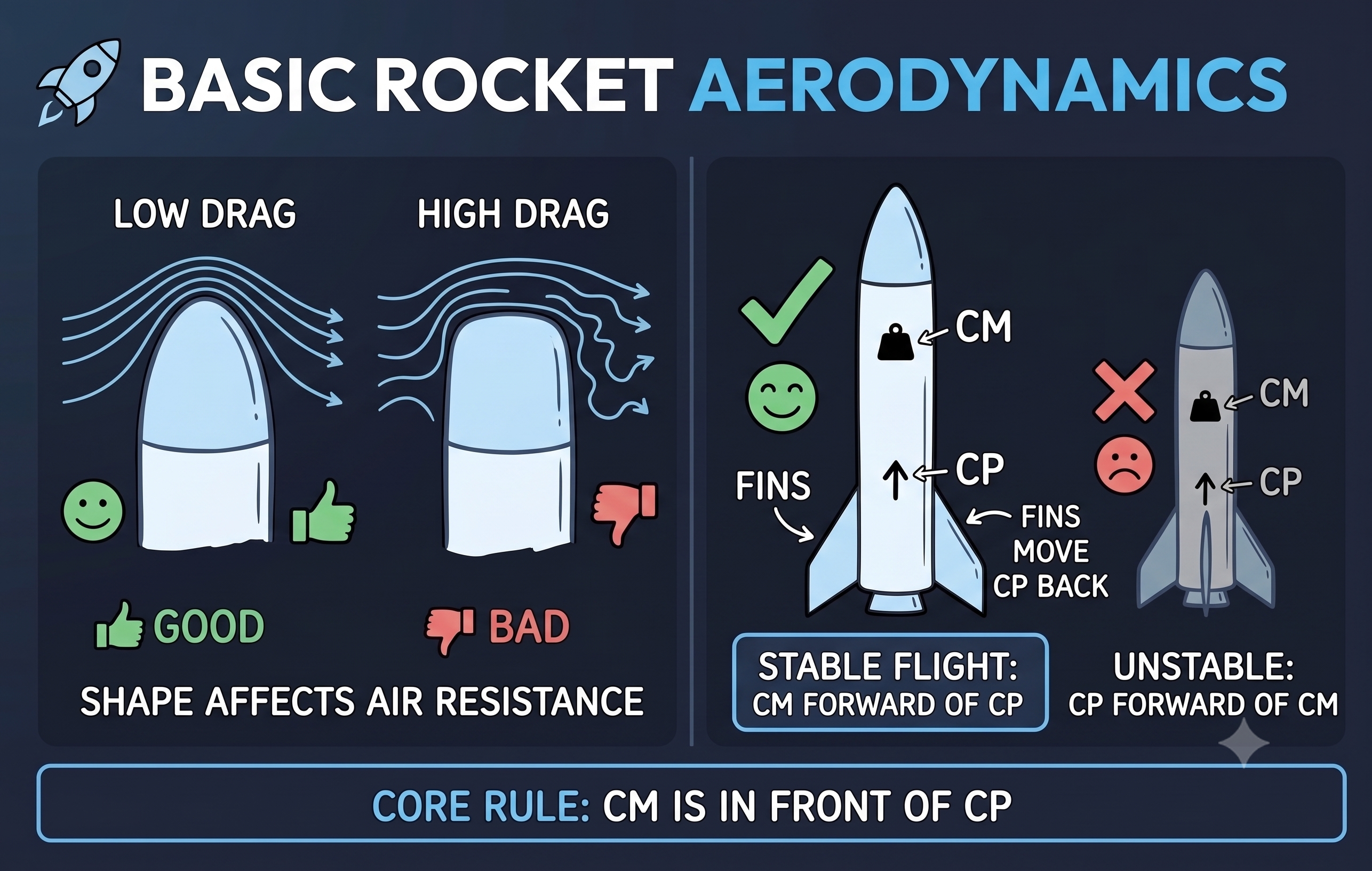
A smooth, pointed nose cuts through the air more easily, reducing air resistance (drag).
Welcome to today's interactive lesson! Please select your class group to begin.
Grades 2 - 5
Enter LessonGrades 6 - 10
Enter LessonTest your knowledge!
Start QuizLaunch Review & Data
Start PresentingSoftware Simulation: Payload
View DemoA pointed nose helps the rocket move through the air faster.
Fins keep the rocket from wobbling or spinning.
The rocket flies straight when the heavy part is in front and the air pushes from behind.
Mission: Build and test a paper rocket with fins.
Boxes are flat and crash into the air! Pointy shapes slice right through the air smoothly.
Without fins, the back of the rocket wiggles and it can tumble out of control!
Gravity pulls it down, and unbalanced air pressure makes it spin.
Rockets go SUPER fast! To reach space, they must travel over 17,000 miles per hour. That's called Escape Velocity.
A trajectory is the path a rocket takes. Rockets don't fly straight up forever; they curve to go into orbit around the Earth!
Engineers use a streamlined shape (tall and pointy) so the rocket can slide easily through the air without being slowed down.
A smooth, pointed nose cuts through the air more easily, reducing air resistance (drag).
Fins keep the rocket flying straight by helping the air push from behind the rocket's balance point.
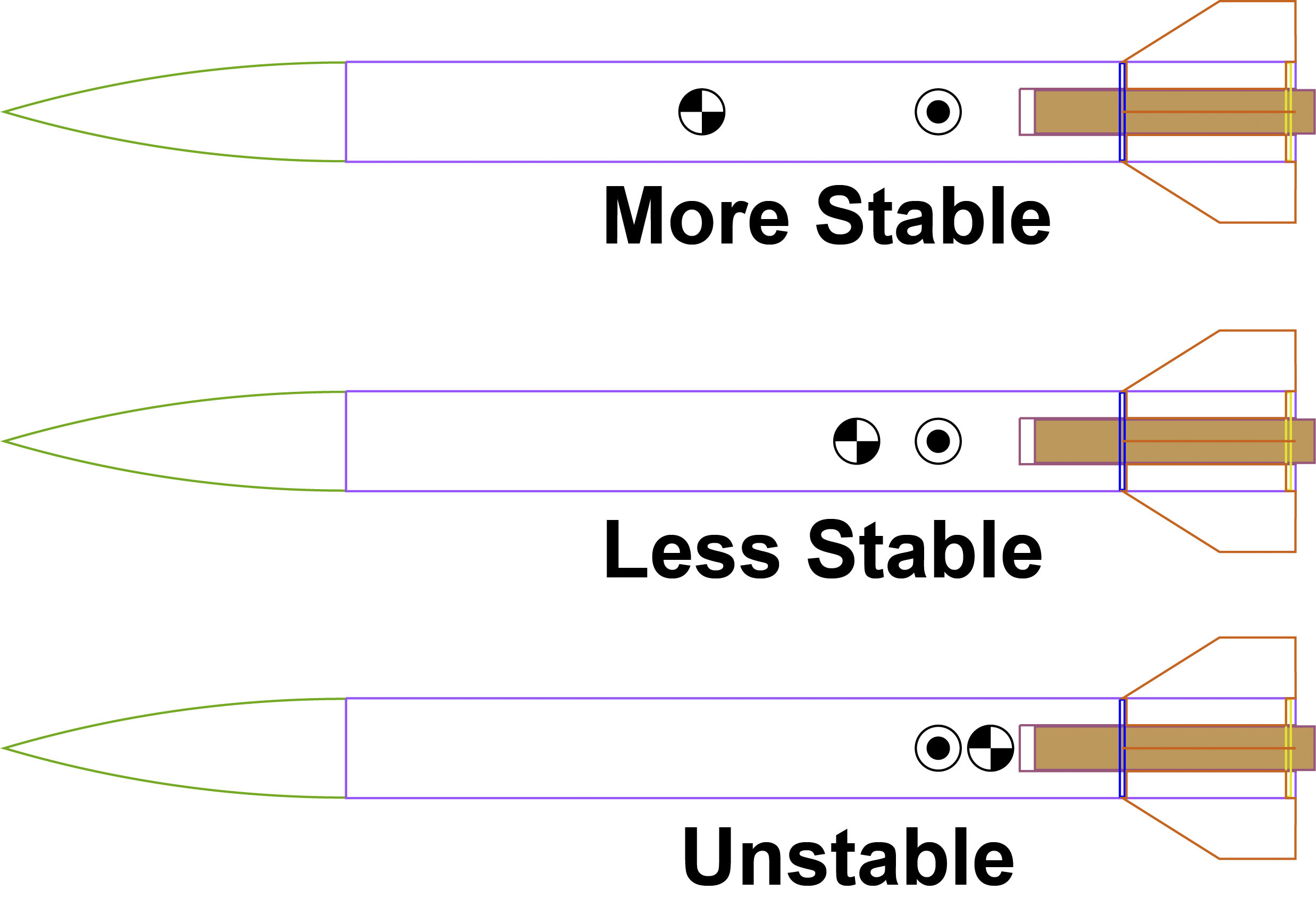
The rocket is most stable when its weight (Center of Mass) is in front of where the air pushes (Center of Pressure).
When a rocket launches, it has to push through the Earth's atmosphere at incredible speeds. The air creates friction and pressure called aerodynamic drag. To minimize this drag, engineers use highly specialized, streamlined shapes.
Different aerodynamic nose cone and body profiles
Engineering is not just about numbers; it's about imagining the future of spaceflight. From complex propulsion systems to next-generation structural designs, visualizing these concepts helps engineers push the boundaries of what is possible.
Conceptual visualization of rocket engineering
Design Comparison: Analyze varying structural parameters.
Reflection: Which design should fly best? What evidence supports your prediction?
These comparisons help you predict how different rocket designs affect flight. Each choice involves a trade-off between stability, drag, and weight.
Simple idea: Long = more stable. Short = lighter but may be less stable.
Simple idea: Large fins = more stable. Small fins = less drag, but less stable.
Simple idea: Heavy nose = better stability. Light nose = higher potential, but less stable.
Rule of thumb: A good rocket needs a balance between stability and low weight. Too much weight or drag lowers the flight height, while too little stability can make the rocket fly off course.
Think about throwing a dart. The heavy tip is in the front, and the fins are at the back. When you throw it, the heavy front stays in front and the fins keep it pointed forward. A stable rocket works the same way.
If wind tilts a stable rocket, air hits the fins and pushes the nose back (Restoring Force). If it's unstable, the push makes the tilt even bigger, causing it to spin or crash (De-stabilizing Force).
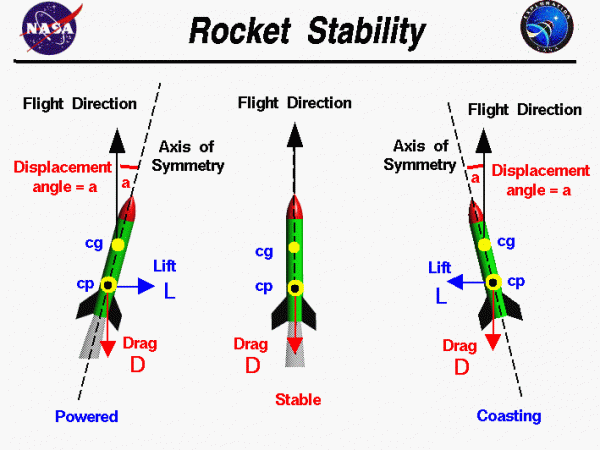
Tie a string around the CG and swing the rocket in a circle. Nose points forward? Stable! Tail points forward or wobbles? Unstable!
To minimize aerodynamic drag. Rounded cones perform better at subsonic speeds, while pointed cones excel at supersonic speeds by piercing shockwaves.
Small fins fail to shift the Center of Pressure far enough back. Uneven fins create asymmetric drag, inducing torque and causing the rocket to spiral.
Balance dictates the restoring force. A properly balanced rocket will self-correct its trajectory when hit by crosswinds.
If the CP is in front of the CM, the aerodynamic forces will flip the rocket. Ensuring CM > CP is the fundamental rule of rocket stability.
A slightly lower flight can still be better if the rocket goes straight, stays controlled, and lands predictably. Engineers do not only chase height. They also care about safety, stability, and repeatable performance.
The long body might help a little, but tiny fins may not provide enough stabilizing force. The rocket could still wobble because body length alone does not guarantee that the Center of Pressure stays far enough behind the Center of Mass.
Changing one variable at a time makes the test fair. If you change the fins, nose, and body length all at once, you cannot tell which change caused the improvement or failure.
Sometimes a controlled spin can improve stability, similar to a football or bullet. But too much spin, or spin caused by uneven fins, usually means the rocket is unbalanced and wasting energy.
Extra nose weight moves the balance point forward, which helps the rocket point into the airflow. But the rocket also becomes heavier, so more of its energy is spent lifting mass instead of gaining height.
Common warning signs include wobbling, spiraling, sudden turns, nose-diving, or large differences between test flights. These observations tell engineers that the rocket may need better balance, fin alignment, or less drag.
Small details matter. A tiny change in fin angle, tape placement, body symmetry, or nose weight can shift the balance and airflow enough to change the whole flight path.
Mach Number: The ratio of rocket speed to the speed of sound. Supersonic flight (>Mach 1) creates shock waves, changing aerodynamic forces. Escape Velocity: The speed needed to break free from Earth's gravity (~11.2 km/s).
The flight path is its trajectory. To reach orbit, rockets perform a Gravity Turn, slowly tilting horizontal. This minimizes aerodynamic stress and fuel consumption while building enough lateral speed to stay in orbit.
Nose Cones: Shapes like Ogive or Parabolic minimize drag at varying speeds. Body Tubes: Longer tubes increase the moment of inertia, resisting rapid tumbling, but add mass and skin friction.
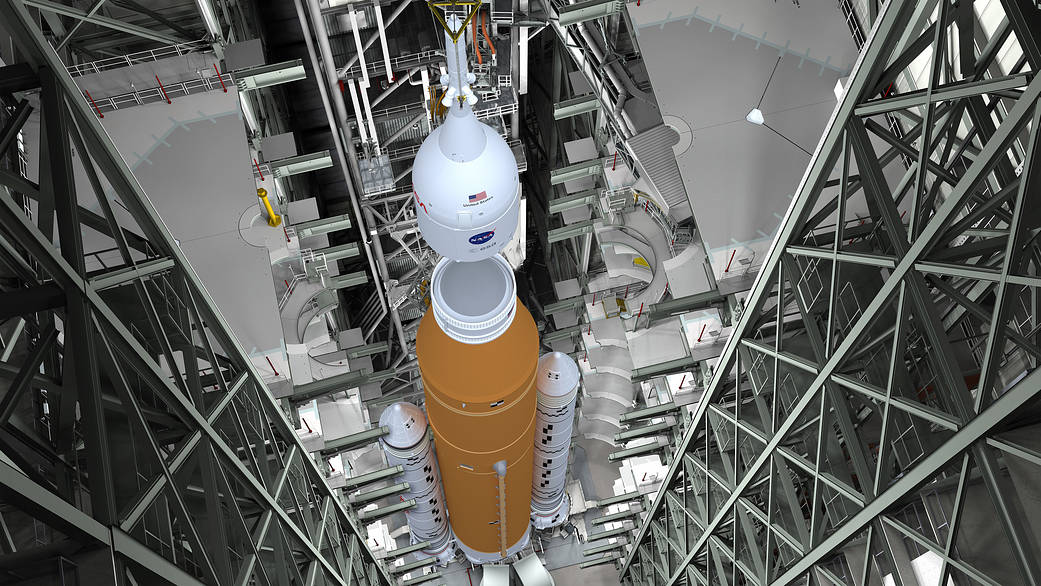
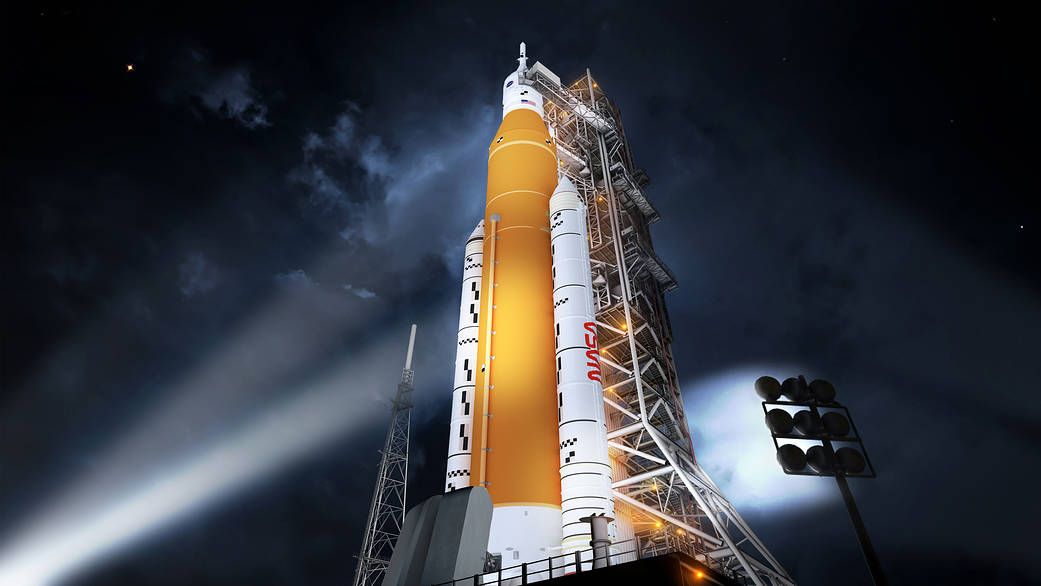
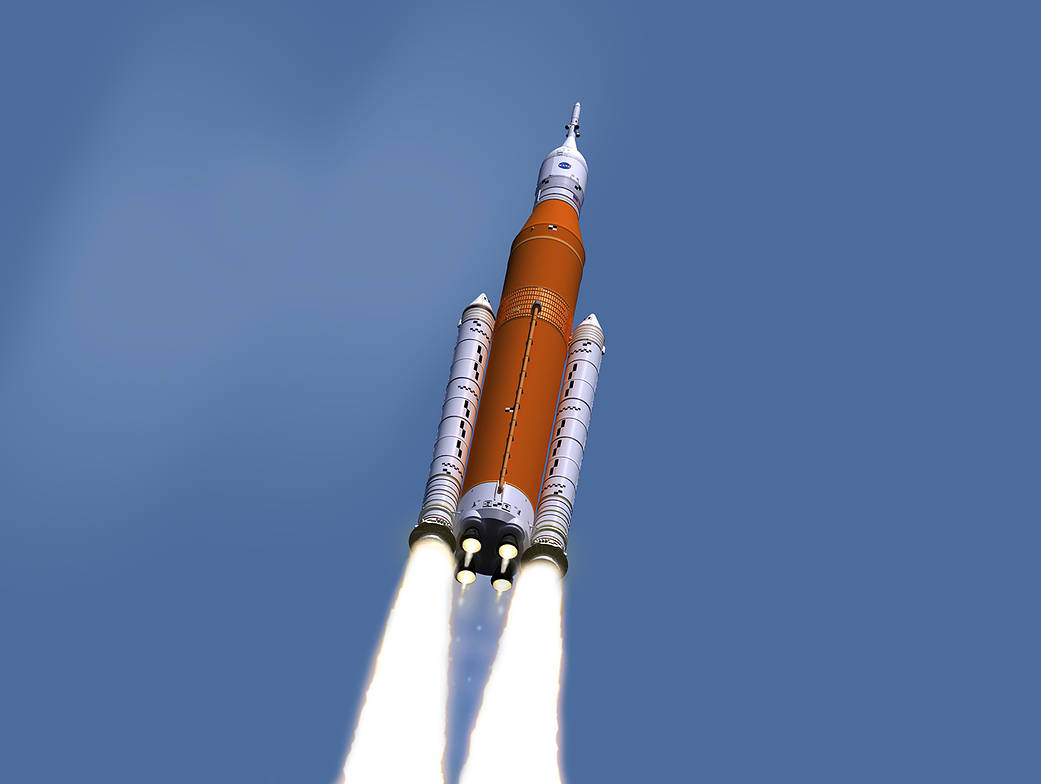
NASA's Space Launch System (SLS) is a super heavy-lift launch vehicle that provides the foundation for human exploration beyond Earth's orbit. This diagram shows the Block 1 configuration carrying the Orion spacecraft.
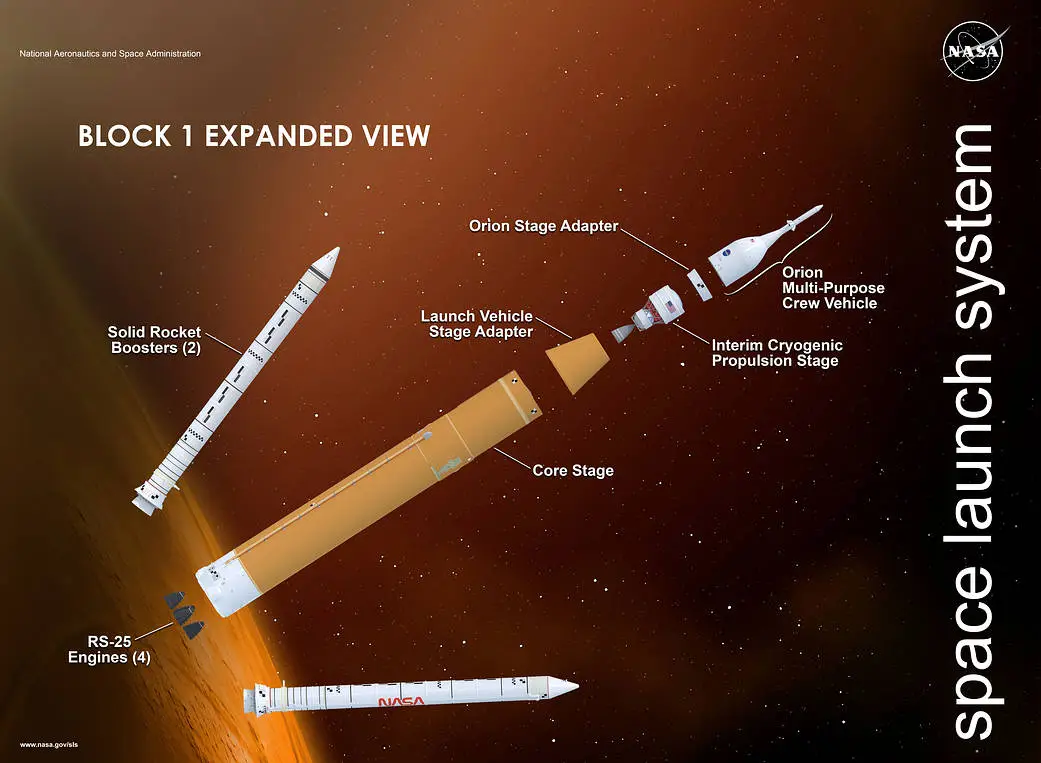
Diagram of the Space Launch System Block 1
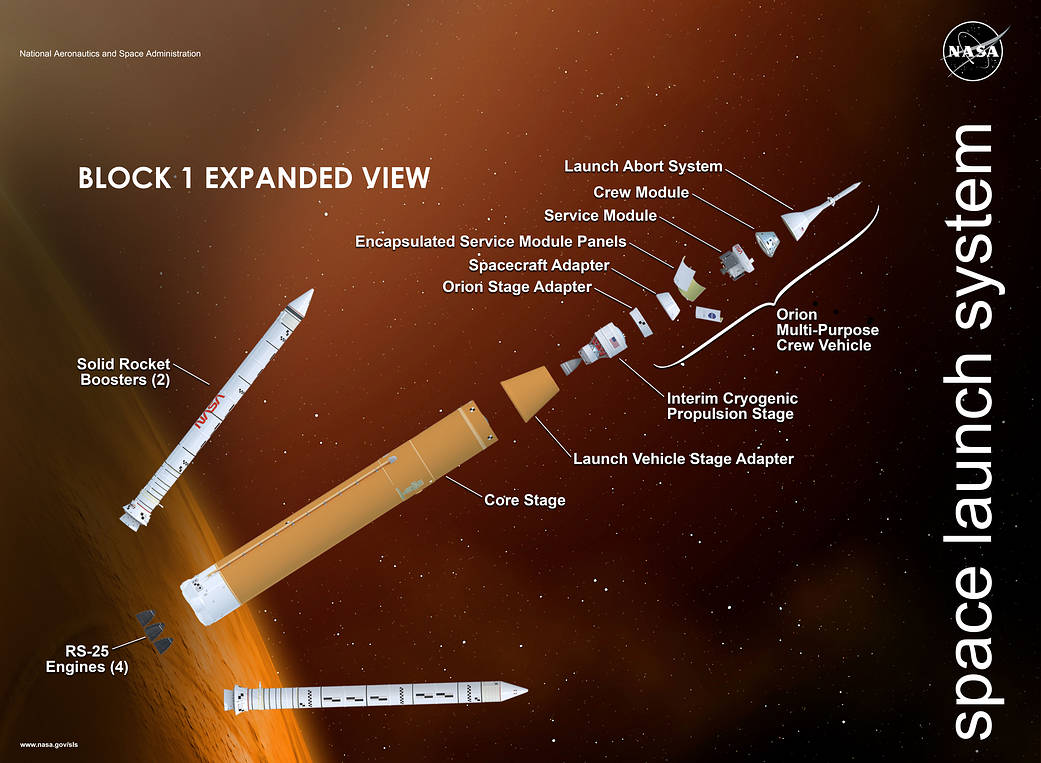
Expanded View of SLS Block 1 Parts
Building a super-rocket is like assembling a giant LEGO set! This expanded view shows how the major pieces stack together:
How do we go further into space without designing a brand new rocket every time? We evolve it!
Just like upgrading a computer, NASA designed the SLS to be upgraded over time. This is called "Evolvability":
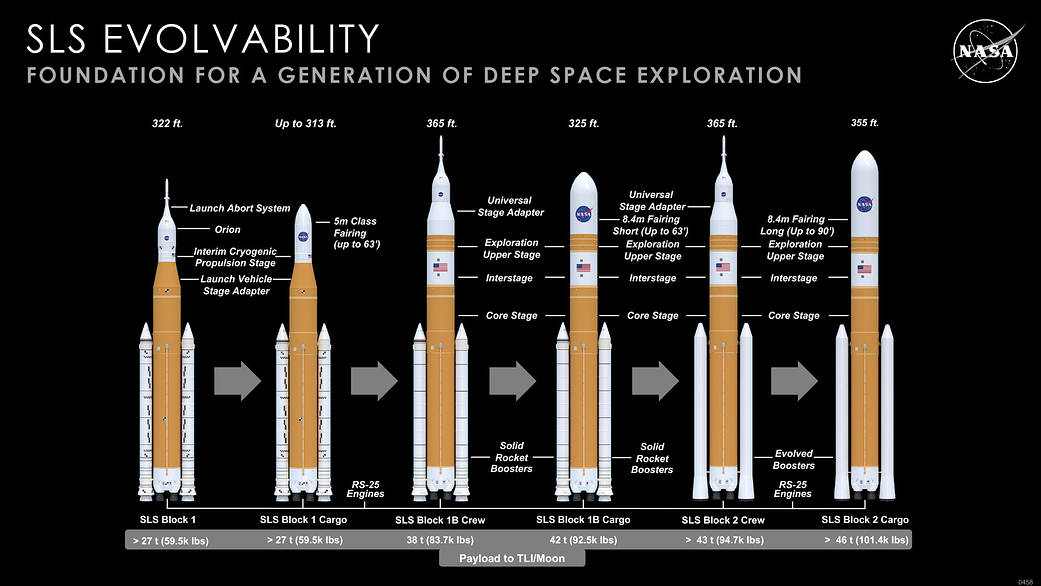
How the SLS evolves for deeper space
Today, rocket science is driven by innovative commercial companies pushing the boundaries of what is possible in spaceflight.
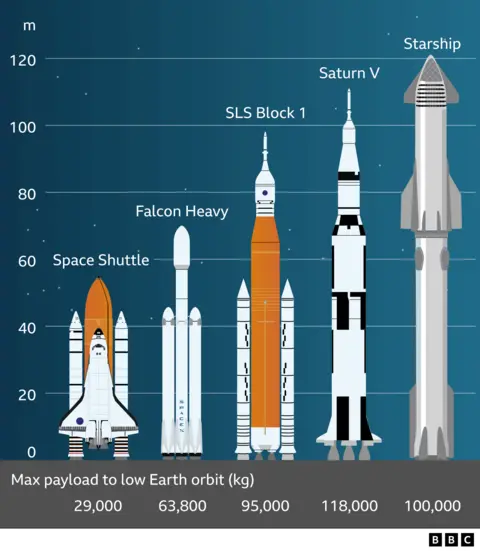
Focus: Reusability & Mars Colonization
SpaceX revolutionized the industry by landing and reusing the first stages of their Falcon 9 rockets, drastically reducing the cost of access to space. They are currently developing Starship, a fully reusable super heavy-lift vehicle.
Focus: Small Satellites & Manufacturing
Rocket Lab uses 3D-printed Rutherford engines and carbon-composite structures for their Electron rocket. They frequently launch small satellites and are known for their rapid launch cadence.
Focus: Space Tourism & Heavy Lift
Founded by Jeff Bezos, Blue Origin focuses on suborbital space tourism with New Shepard and is developing the massive New Glenn rocket for orbital missions. Their motto is "Gradatim Ferociter" (Step by step, ferociously).
For decades, rockets were used only once. After launching their payload into space, the empty stages would fall into the ocean and sink. This made spaceflight incredibly expensive.
SpaceX changed the game by designing rockets that can fly themselves back to Earth and land vertically on a landing pad or drone ship. This reusability is like flying an airplane: instead of throwing the plane away after one flight, you refuel it and fly again!
In a massive milestone for reusability, SpaceX recently pushed the boundaries even further by catching a descending super heavy rocket booster directly out of the sky using giant mechanical arms on the launch tower—lovingly called the "Chopsticks." This allows for even faster turnaround times, proving that making space travel affordable and sustainable is the future.
Reference: SpaceX’s Reusable Rocket Aces the Landing (Finance Magnates)
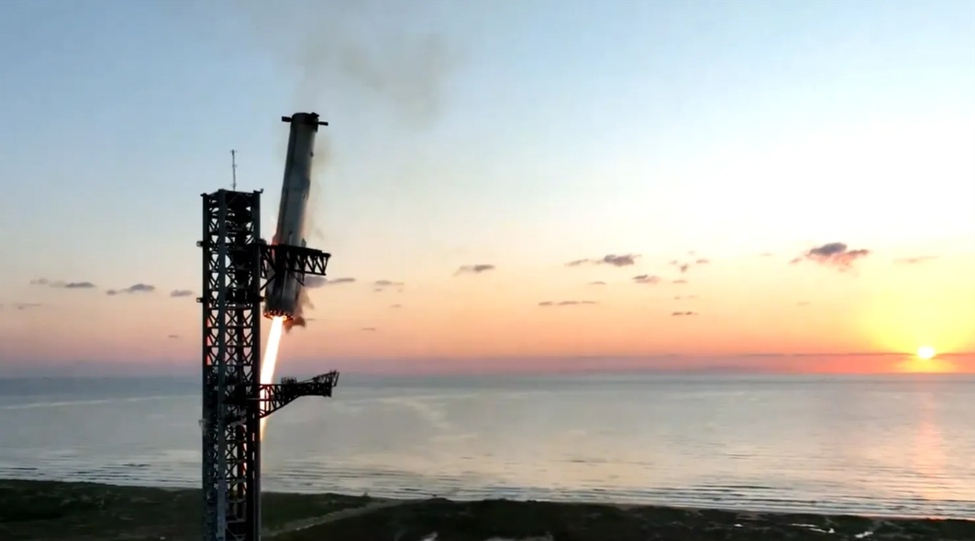
A SpaceX Falcon 9 booster landing vertically
You'll face 20 questions covering everything from rocket shapes and stability to the latest reusable rockets. Are you ready?
Great job!
Engineers communicate data, conclusions, and improvements. Remember: Failure provides useful information.
What was the main goal of your mission? (e.g., to fly the highest, or go the farthest)
What did your rocket look like? Describe the body, nose cone, and fins.
What is the ONE thing you changed between tests? (Everything else must stay the same!)
What numbers did you measure? Which test gave you the best performance?
What did the data teach you? Why do you think the winning design worked best?
If you could do the experiment again, what new thing would you change to make it even better?
Objective: Objective
Design text
Variable Tested: Variable text
Data text
Conclusion text
Improve text
“Theoretical Mission: Optimizing Payload Mass”
Our objective was to design a digital rocket in our Flight Simulator that could successfully launch a satellite into space (an altitude of 100 km) without running out of fuel.
We designed a highly stable, standard rocket so we could perfectly isolate the effect of payload weight on the engine's thrust.
We tested the Payload Mass (the weight of the satellite).
Why? The heavier the satellite, the more gravity pulls down on the rocket. We wanted to find the maximum weight our engine could push into space.
| Payload Mass | Flight Status | Max Altitude Reached |
|---|---|---|
| 10 kg | Successful Orbit | 120 km |
| 50 kg | Successful Orbit | 102 km |
| 100 kg | Failed (Fell back to Earth) | 85 km |
✅ The most efficient performance was carrying a 50 kg payload to an altitude of 102 km.
This was the heaviest satellite we could launch into space before gravity overpowered our engine.
If we had more time to run simulations, we would:
We predict that a lighter rocket body would allow the current engine to carry the 100 kg satellite successfully.